
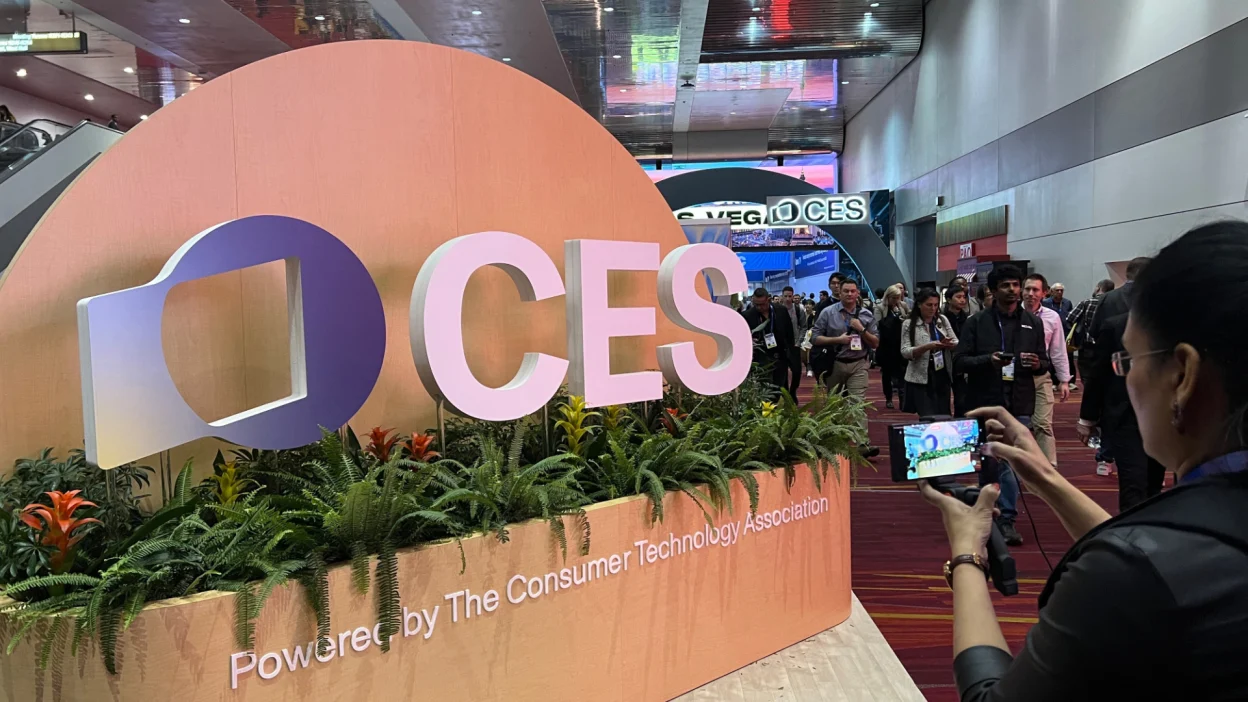
At CES 2026, there were numerous innovations designed for people with visual impairments. For Ani Sargsyan, an employee at Seehaptic and a blind user who came to test the devices on-site, the goal was clear: to assess their real-world usefulness in daily life. After testing them, she ranked the solutions based on their relevance.
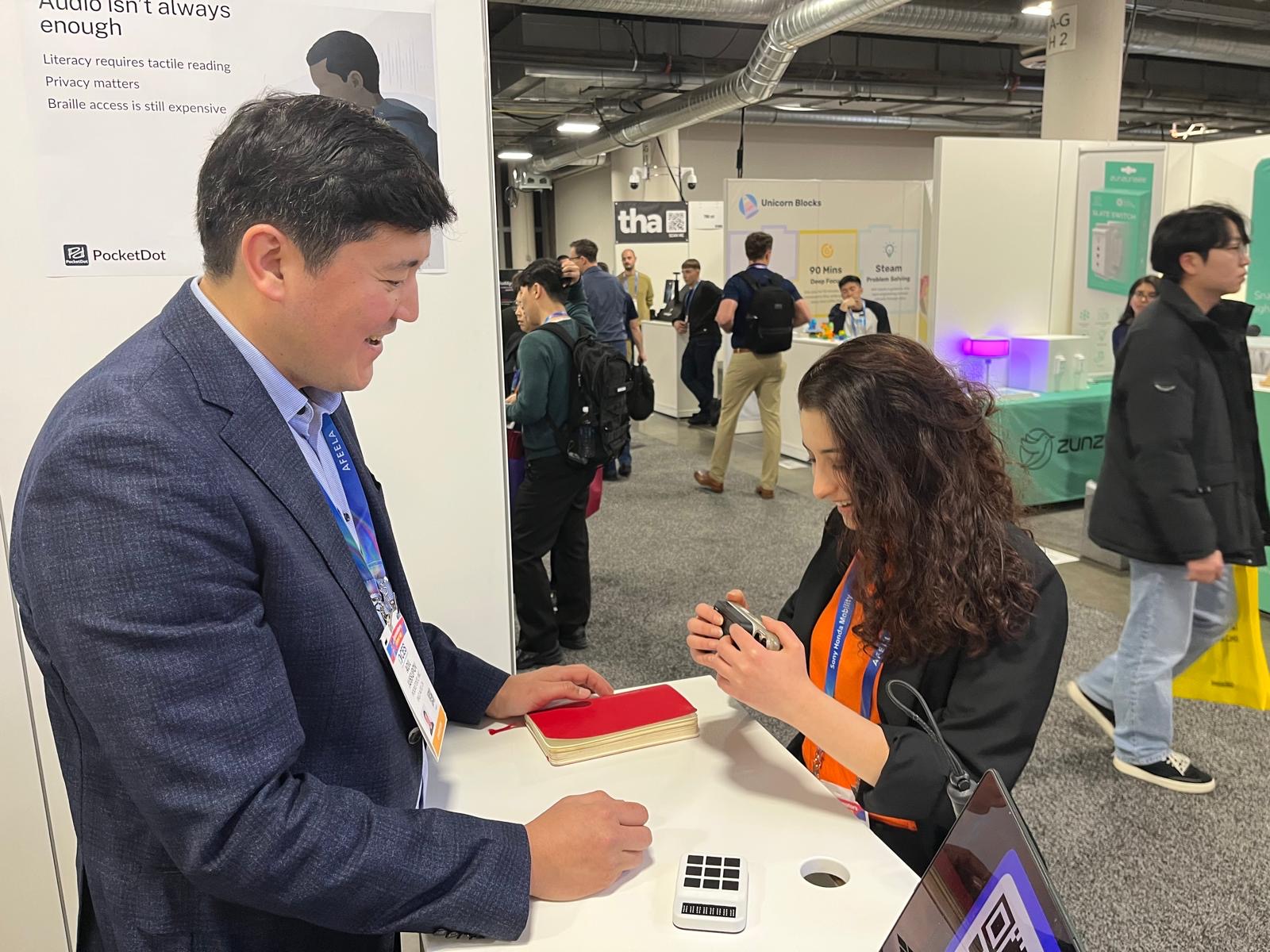
This Braille display attaches magnetically to the back of a phone and connects via Bluetooth, allowing incoming messages to be displayed on the Braille cells and replies to be typed directly on the keyboard. Compact in size, it features 8 Braille cells and a Perkins-style Braille keyboard. The goal is to facilitate access to written communication without relying solely on text-to-speech. For Ani, their goal of improvingthe independence and privacy of blind users is particularly promising.

With HapWare, she discovered a haptic wristband capable of conveying emotions and gestures through coded vibrations.“A significant portion of communication is nonverbal,”notes Jack Walters, the company’s CEO.
The goal is to make sign language accessible using glasses connected to a wristband, equipped with sensors similar to those in Meta glasses.
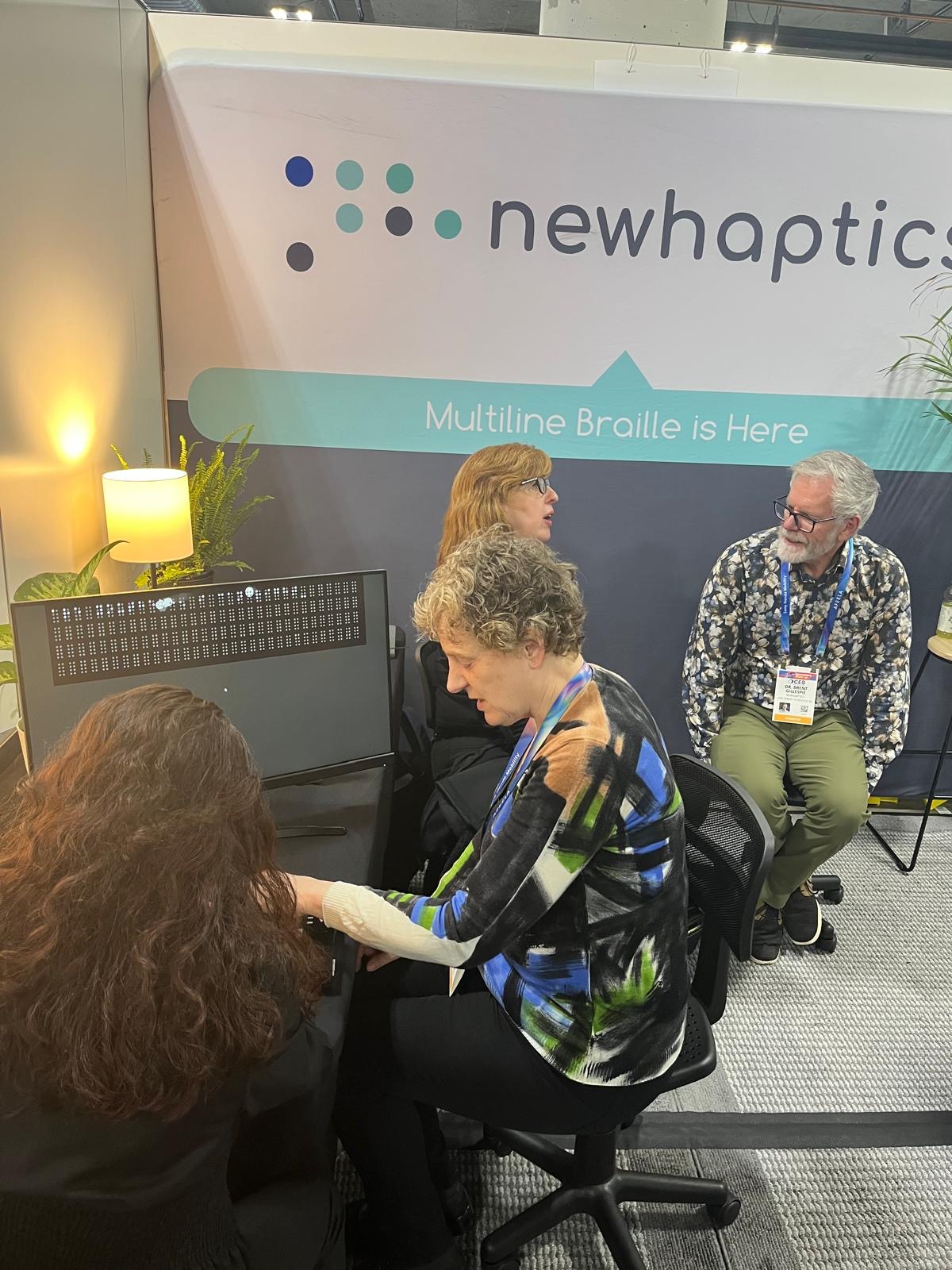
The Newhaptics Braille display also caught his attention.“I really liked it.” Multiple reading lines, intuitive tactile correction, and simple operation, which can be supplemented by learning games to get started with Braille… With all these features, the device remains fairly compact and easy to handle. “It’s a lot like a traditional notepad, but with really practical features,” she sums up.

Ani is impressed by the Agiga smart glasses’ precise descriptions and their integration with Be My Eyes. “It’s seamless and well-designed.” However, Ani adds a caveat: “ It kind of duplicates the apps I already use.” The innovation is real, but not necessarily essential.
Finally, she is taking a keen interest in guidance solutions such as Glidance, a small robot that physically guides the user much like a guide dog.“The physical feedback really makes the journey safer.”
As she walks past the booths, Ani reminds us that technology is not an end in itself. For her, what matters most is the independence it provides, its ease of use, and the fact that it takes into account the needs of the people it serves. More than technical performance, it is the sense that the products have been designed with and for blind users that truly makes the difference.
56 Boulevard des Invalides
75007 Paris
(Public Reception)
Thibaut DE MARTIMPREY
Campus Director
06 81 30 14 01
tm@campusbraille.fr
Headquarters and GIE administrative offices
5 avenue Daniel Lesueur
75007 Paris


